Serapeum of Saqqara: Apis Bulls and the Underground Tombs
Explore the Serapeum of Saqqara, its underground galleries and Apis burials. Plan tickets, timing and a Cairo visit with this CasaViajes guide.
The essentials at a glance
- The Serapeum is at Saqqara in the Memphite necropolis.
- It served as a burial place for the sacred Apis bulls.
- Its galleries and sarcophagi have a different history from Djoser's pyramid.
- Confirm the route and admissions included in your booking separately.
- The suggested 45–60 minutes are an estimate, not an official visit duration.
The Serapeum of Saqqara offers a different way to explore ancient Egypt: leaving the open landscape behind and entering underground galleries connected with the sacred Apis bulls. If you are planning a Saqqara visit and want to spend time beyond the Step Pyramid, this is a monument to ask about when arranging your itinerary.
This CasaViajes guide brings together essential historical context, things to look for and practical planning advice, with a clear distinction between suggested visits and services confirmed in your booking.
The Serapeum at a glance
- Location: the Saqqara archaeological area in the Memphite necropolis, south of Cairo.
- Main interest: underground burial galleries and large stone sarcophagi.
- Religious context: the burial of the sacred Apis bulls.
- Planning point: request the Serapeum by name and confirm its admission arrangements.
What is the Serapeum of Saqqara?
Egypt's Ministry of Tourism and Antiquities identifies it as the burial place of the Apis bulls, associated with Ptah and his cult at Memphis. These animals received ceremonial funerary treatment after death. The official Serapeum description establishes that religious context: this is not a royal tomb.
Starting with that distinction makes the visit more rewarding. It gives a framework for understanding why a monument dedicated to animals belongs in a cultural journey through Egypt.
How old is it?
The Ministry's Saqqara overview places Apis burials here from the Eighteenth Dynasty through the Ptolemaic Period. That long history is distinct from the age of Djoser and his Step Pyramid.
Visiting both monuments therefore means comparing different periods and approaches to burial within the same wider necropolis, rather than seeing two elements of a single building project.
What to look for during your visit
The underground galleries
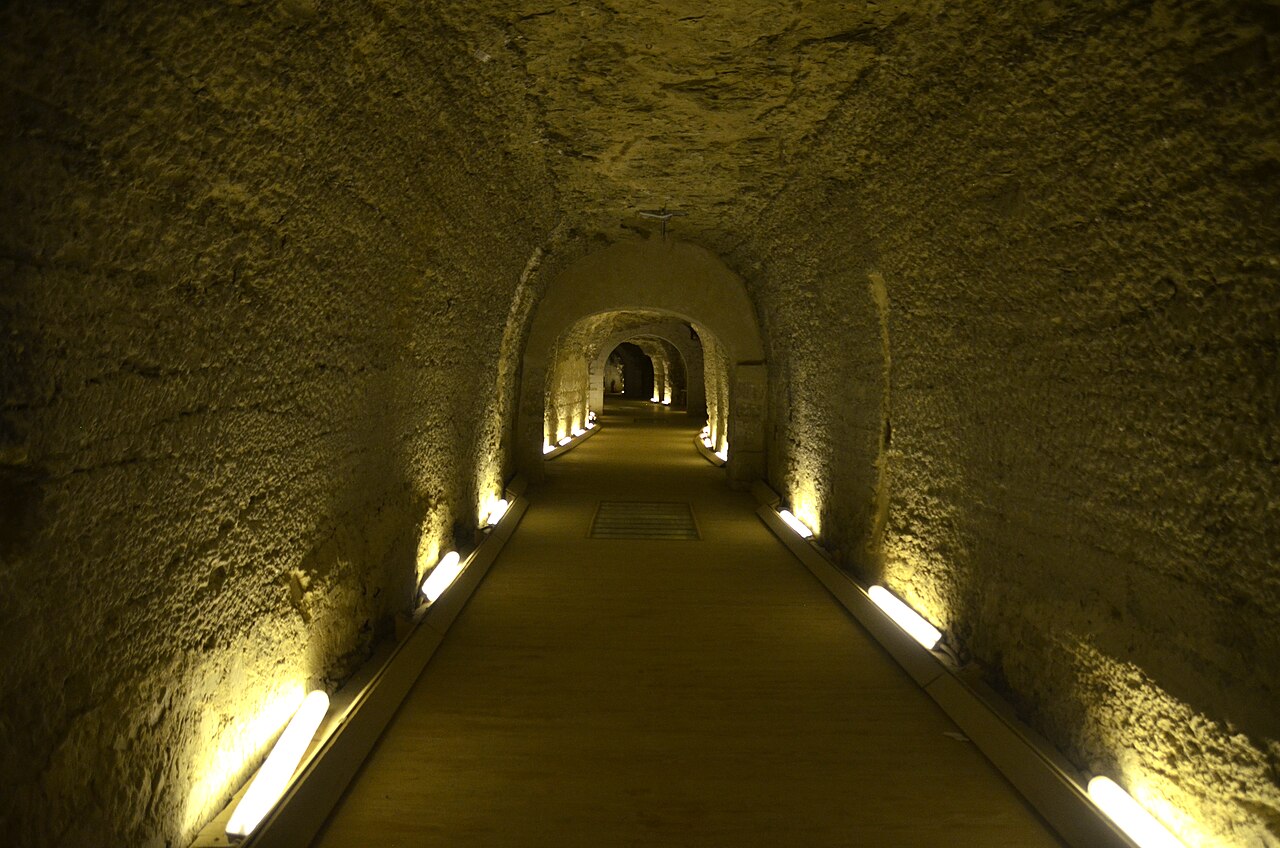
The way you move through a place affects what you notice. Take time to look at the relationship between the passage and its chambers, examine the surfaces and listen to the explanation before moving on. You do not need to rush from one photograph to the next to make the visit worthwhile.
The cover of this guide is an archive photograph of the corridors taken in 2020. It illustrates the setting, rather than confirming which sections will be accessible on your travel date.
The large sarcophagi
The sarcophagi are a reason to include this monument in your route. Instead of focusing only on dramatic weight claims, ask about their purpose, their context and the arrangement of the chambers. Figures repeated online do not always identify a particular object or a verifiable measurement.
View the monument from the permitted areas and follow staff instructions. Access to a chamber or a particular viewpoint depends on the visitor route in operation.
Evidence beyond the architecture
You can also prepare through museum collections. The Louvre catalogues stelae from the Serapeum depicting Apis, connecting the site with religious imagery and offerings. Looking at a documented object before travelling helps separate archaeological evidence from stories that have no identifiable source.
Mariette and the study of the site
Work at the Serapeum belongs to the career of Auguste Mariette. The INHA biography places his Saqqara excavations within his first Egyptian stay, between 1850 and 1854. It offers useful context for the site's modern rediscovery without reducing that history to a single anecdote.
Planning a Serapeum visit from Cairo
Allow time for the experience
As an itinerary suggestion, CasaViajes recommends considering roughly 45–60 minutes for this part of the visit, in addition to movement around Saqqara. This is a planning estimate, not an official duration or a guarantee. Your group's pace, the explanation and the available access can all affect timing.
If you also want to see the Step Pyramid and other monuments, leave room in the morning's schedule. Explain your priorities before confirming the programme: adding every possible stop on the day can reduce the time available for the places you most want to understand.
Check tickets and opening arrangements
Consult the Ministry's Saqqara information and reconfirm arrangements near your travel date. Do not assume that admission to the archaeological area includes every monument or interior.
Before booking, ask:
- Does the itinerary specifically include the Serapeum?
- Is its admission covered by the quotation?
- Which other interiors are included?
- What alternative is available if access changes?
Prepare for the route
Mention any walking difficulties or discomfort in enclosed spaces in advance. Ask about the current access route and whether the itinerary can be adapted. Comfortable footwear, water and sun protection are useful for the outdoor sections. Check the photography rules before using your equipment.
What can you combine it with?
Djoser's Step Pyramid makes a useful companion visit when comparing architecture and periods. Depending on your available time, ask about a decorated tomb, the Imhotep Museum or continuing to Memphis or Dahshur. These are itinerary possibilities to discuss, rather than automatically included visits.
For the wider setting, UNESCO describes Saqqara within Memphis and its Necropolis. That broader view explains why a single stop cannot represent the entire archaeological area.
Frequently asked questions
Are Serapeum and Serapeo de Saqqara names for the same monument?
Yes. Both are used for this site. Specify Saqqara when arranging your visit so the destination is unambiguous.
Is it part of an interior visit to Djoser's pyramid?
They are different monuments. Confirm the route and admissions covered by your booking separately.
Can I add it to a trip I have already arranged?
You can request it. The addition depends on your programme, timing and access. Any extra service or supplement should be confirmed in an updated quotation.
Plan your visit with CasaViajes
If this monument is a priority, contact CasaViajes with your approximate dates, group size and the other places you want to visit. Ask for a proposal that makes time for the Serapeum and clearly identifies the route, admissions and services.
Historical information and sources checked on 28 November 2026. Suggested timings are estimates; reconfirm opening arrangements, prices and access conditions before travel.
Archive photograph: Carole Raddato, 14 February 2020, via Wikimedia Commons. Licensed under CC BY-SA 2.0. Uses Wikimedia's reduced-size version with no further changes; no endorsement of CasaViajes by the photographer is implied.