Djoser's Step Pyramid at Saqqara: history and visitor guide
Explore Djoser's Step Pyramid at Saqqara: its history, Imhotep, what to look for in the complex and how to plan a visit from Cairo.
The essentials at a glance
- Djoser's Step Pyramid is different from the pyramids at Giza.
- Its six levels belong to a Third Dynasty funerary complex.
- Saqqara contains many monuments: confirm which your itinerary includes.
- Site admission is not the same as admission to every interior.
- Allow time to understand the complex and reconfirm conditions before travel.
Before the great pyramids of Giza, there was a different idea: raising a royal tomb through a succession of stone levels. Djoser's Step Pyramid offers a way to explore that moment of change. Rather than looking only for a photograph of its outline, take time to consider what the surrounding courtyards, buildings and ceremonial spaces were intended to mean.
This CasaViajes guide explains the monument's significance and helps you plan a visit to Saqqara, also written Sakkara. When comparing itineraries, check both the destination name and the specific mention of Djoser's pyramid: a short stop and a wider exploration of the necropolis are not the same programme.
What is the Step Pyramid of Djoser?
The pyramid dates to the Third Dynasty, at the beginning of the Old Kingdom. Egypt's Ministry of Tourism and Antiquities identifies it as the first pyramid built by the ancient Egyptians. Its six levels mark a significant change from the mastaba, a rectangular funerary structure.
It is worth resisting the idea that this is simply an unfinished version of a smooth-sided pyramid. Its shape belongs to a different stage in funerary architecture. Looking at each level and its relationship to the wider complex helps you appreciate a monument with its own identity, rather than treating it only as a precursor to Giza.
Djoser and Imhotep: a king and his project
The king for whom the complex was built is known as Djoser, also written Zoser. Imhotep is associated with its design: the University of Memphis identifies this royal official as the project's designer. University College London notes that later sources also credited him with that role.
Distinguish this historical attribution from the legends that subsequently surrounded Imhotep. There is no need to invent a definitive construction method or a mysterious explanation to appreciate the project's ambition. A thoughtful guided visit should help you separate evidence, interpretation and questions still being studied.
Why building in stone mattered
The site's importance is not simply about height. The Metropolitan Museum of Art explains that the complex sought to create an enduring royal residence for the afterlife. Stone gave a lasting form to elements associated with less durable buildings.
One example is the faience-tile decoration of underground galleries, which evoked palace matting. It is a useful clue for understanding the monument: the architecture did more than protect a burial; it recreated an environment for the king's existence after death. This does not mean all those galleries are included in, or open during, a tourist visit.
What to look for in Djoser's complex
Think of the visit as a conversation between the main monument and its surroundings. The following are editorial suggestions, not confirmation of access to every space:
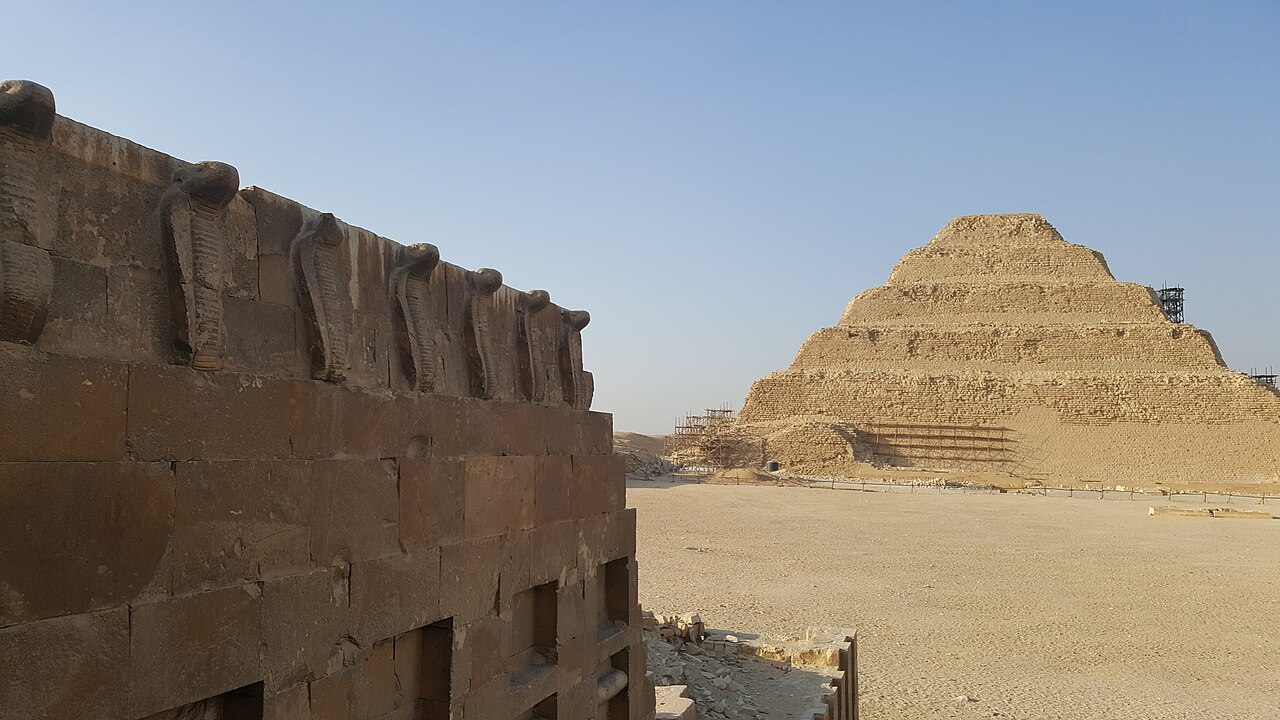
- The stepped outline: begin with a broad view and notice the decreasing size of the levels as they rise.
- The courtyards: ask what they were for, rather than treating them as empty areas between photographs.
- The Sed Festival area: the ceremonial structures help explain the representation of royal authority.
- The South Tomb: ask about its interpretation and the particular conditions for visiting it.
The University of Memphis description of the courts connects them with the royal jubilee. The Ministry discusses the South Tomb as a possible symbolic burial: that function is an interpretation, not a certainty to present without qualification.
Saqqara is much more than one pyramid
Saqqara belonged to the necropolis of Memphis and contains monuments from different periods. It is part of Memphis and its Necropolis: the Pyramid Fields from Giza to Dahshur, inscribed on the World Heritage List in 1979. See UNESCO's description of the property for the wider context.
That scale matters when planning your day. An excursion mentioning Saqqara may mean a visit only to Djoser's complex, or a programme incorporating other places. These are not equivalent experiences, even when they share the same destination name.
Other visits to consider
The Pyramid of Unas offers another perspective: the Ministry highlights its Pyramid Texts, inscribed to help the king in the afterlife. The general Saqqara monument page also describes the Serapeum galleries and the Imhotep Museum.
Choose by interest rather than collecting names. If architecture is your focus, you might concentrate on Djoser; if you want to compare burial forms or learn about inscriptions, request a broader proposal. Each addition needs time and a check of access conditions for your chosen date.
Tickets: distinguish site admission from interior access
Do not assume that general admission grants entry to every monument. The official Saqqara information distinguishes ticket types and access to places including Djoser's pyramid, the South Tomb and the Serapeum. Conditions can change, and official pages may be updated at different times.
For that reason, this guide does not set a fixed ticket price. Check official channels close to your visit and ask for a quotation that specifies exactly which admissions are included. Also distinguish seeing a pyramid from outside from entering its interior.
If travelling with students, children or anyone requiring assistance, ask ahead about documentation, conditions and alternative routes. A monument's name on an itinerary does not establish that its interior is suitable for everyone.
Planning a visit from Cairo
Build your plan around your accommodation and how much time you want at the monuments. As an editorial planning suggestion, allow two to three hours for a visit focused on Djoser's complex; add time if including other areas of Saqqara. This is not an official duration and excludes transfers.
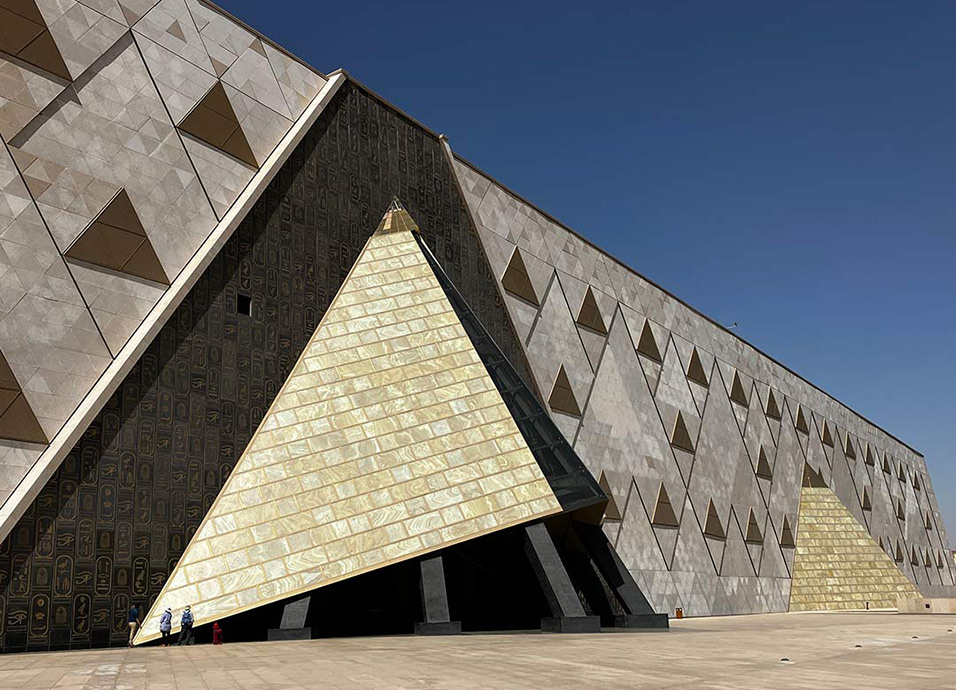
To combine Saqqara with Giza or Dahshur, request a schedule that accounts for journeys, breaks and access arrangements rather than only listing destinations. If you also want to visit the Grand Egyptian Museum, consider separate days where that would make each visit more enjoyable.
Prepare comfortable footwear, water and sun protection appropriate to your needs. Respect marked boundaries, do not climb structures and follow staff instructions. If underground spaces interest you, discuss them before booking and ask about the actual route conditions.
Frequently asked questions about Saqqara's pyramid
Is this the Great Pyramid of Giza?
No. Djoser's Step Pyramid is at Saqqara; the Great Pyramid of Khufu belongs to the Giza complex. These are different monuments and visits, although both form part of the wider Memphite funerary landscape described by UNESCO.
Can you go inside Djoser's pyramid?
Official information lists a specific admission for the pyramid. Confirm availability, current conditions and whether it is included in your booking. A general mention of a Saqqara visit should not be turned into a promise of interior access.
Is it worth visiting if I am already going to Giza?
If you are interested in how pyramids developed, comparing the two places can add context to your trip. If you prefer a less intensive itinerary, prioritise your interests and avoid adding Saqqara as a rushed stop simply to complete a list.
Plan your visit with CasaViajes
Contact CasaViajes with your dates, number of travellers, planned accommodation and whether you want to visit only Djoser's complex or add other Saqqara monuments. Request a proposal that clearly distinguishes guiding, language, transport and admission before confirming.
To continue planning your Cairo stay, see our Grand Egyptian Museum guide. Choosing a realistic route is a way to give each place the time it deserves.
Photograph credit
Archive photograph of the pyramid and the complex's cobra sculptures: Ovedc, 2017, via Wikimedia Commons, licensed under CC BY-SA 4.0. Reduced web version with responsive framing and no other retouching. The visible scaffolding relates to the photograph's date, not the current status of work at the monument.
Sources & references
- Ministry of Tourism and Antiquities: Step Pyramid Complex of Djoser
- University of Memphis: Djoser's pyramid and courts
- University College London: Djoser and Imhotep
- The Metropolitan Museum of Art: Djoser's architecture and faience
- UNESCO: Memphis and its Necropolis
- Ministry of Tourism and Antiquities: Saqqara and admission
- Ministry of Tourism and Antiquities: Pyramid of Unas